What a saga — and what a fitting end to it, at least for La Fenice. Here’s the full picture:
The appointment (September 2025)
Beatrice Venezi was appointed permanent Musical Director and the first female conductor at La Fenice in September 2025. The announcement was immediately contentious: the orchestra protested right away, with musicians criticizing the lack of transparency in the appointment process and questioning her artistic background.
The opposition builds
In October 2025, the theatre’s trade unions called a strike and demanded Venezi’s resignation, arguing that she lacked the necessary experience and expertise to lead the orchestra, especially La Fenice orchestra.
A separate letter signed by 140 season ticket holders also called for her resignation, ultimately leading to the cancellation of the premiere of Berg’s Wozzeck at La Fenice.
The political dimension was impossible to ignore: concerns were raised over her affiliations to Giorgia Meloni’s far-right government — Venezi had been appointed as an adviser to the culture minister after Meloni came to power in 2022.
The self-inflicted coup de grâce
Despite all that accumulated tension, what finally brought her down was an interview she gave herself. On 23 April, Venezi gave an interview to the Argentine newspaper La Nación where she said that
“this is an orchestra in which positions are passed down practically from father to son.”
The orchestra’s response was swift and furious: the staff issued a statement calling Venezi’s claims “serious, false, and offensive,” insisting that positions are filled exclusively through international public competitions based on talent and rigorous procedures.
The dismissal (26–28 April 2026)
Superintendent Nicola Colabianchi terminated Venezi from all future contracts, stating that her public statements were “incompatible with the Foundation’s principles and with the protection and respect due to the members of the Orchestra.”
When the news broke during the closing performance of Lohengrin, the audience at La Fenice erupted in applause.
The postscript — the silence she couldn’t manage
Rather than exit with dignity, Venezi took to social media with a Facebook post that, without naming the theatre, appeared to frame her dismissal in a positive light, writing about the energy of the place and its connection to the city. A masterclass in not knowing when to stop.
As for Meloni, her office denied a newspaper report that she had authorized Venezi’s dismissal — the Corriere della Sera had said Meloni approved the sacking due to the “accumulation of controversy.” Make of that what you will.
“Discretion is the better part of eloquence.”
“Un bel silenzio non fu Mai scritto”
Un bel silenzio, indeed. She had months to practice it and never quite managed.
Everyone who championed her — whether it was Colabianchi initially, or the political figures around the Meloni orbit — spoke in terms of “renewal,” “freshness,” “bringing opera to young people.” Aesthetics and optics, never craft.
Venezi herself fed that framing: the evening gowns, the photographs, the long hair (which is a genuine practical question for a conductor — peripheral vision and physical presence matter), the deliberate choice to forgo a baton, which in her case read more as personal branding than artistic statement.
It was Culture Minister Alessandro Giuli who uttered the infamous lines, in November 2025, speaking to Il Foglio.
“Beatrice resterà alla Fenice e sarà la principessa di Venezia. Anzi, appena verrà messa alla prova, se ne innamoreranno persino gli orchestrali.”
The sitting Culture Minister of Italy, talking about the incoming music director of one of the world’s great opera houses, in the language of a fairy tale. Extraordinary.
And there’s a delicious coda to that: after her dismissal, Venezi herself said in an interview:
“Buongiorno, sono la Principessa di Venezia… È così che mi chiamava il ministro Giuli. Invece il sovrintendente Colabianchi diceva di me che sono ‘una ragazza che sa farsi apprezzare’. Lei capisce quanta misoginia? Quanto disprezzo?”
She’s not wrong about that — and it’s actually the most self-aware thing she said throughout the entire affair. Because here’s the uncomfortable irony: the people who most reduced her to her appearance and charm were precisely those championing her.
Her supporters did more damage to her credibility than her opponents did.
Even the RSU of La Fenice made a pointed distinction:
“Chi denigra Beatrice Venezi è chi la definisce ragazza, principessa — noi ne rispettiamo la professionalità.”
The orchestra, in other words, was careful not to attack her personally — they focused on the process and the role. It was her own political patrons who infantilized her.
The baton is not merely tradition — it extends the conductor’s physical signal and makes intent legible across a large ensemble. Dispensing with it can work, but it requires an exceptionally clear gestural language and an orchestra that knows you deeply. Neither condition existed at La Fenice.
Moreover, the flowing hair, the evening gown aesthetics, the curated photography — all of that built a brand that was more performer than director. Those are not the same thing.
As for La Fenice and Venice’s identity — The city is under enough pressure maintaining any authentic cultural life amid the tourist tide. Its institutions are not ornaments; they are the actual substance of what Venice still is.
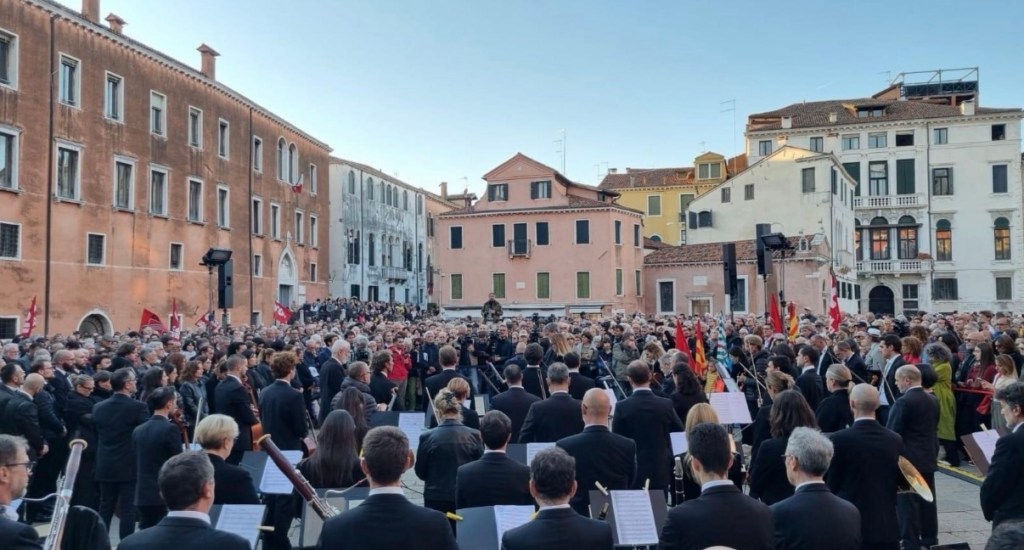
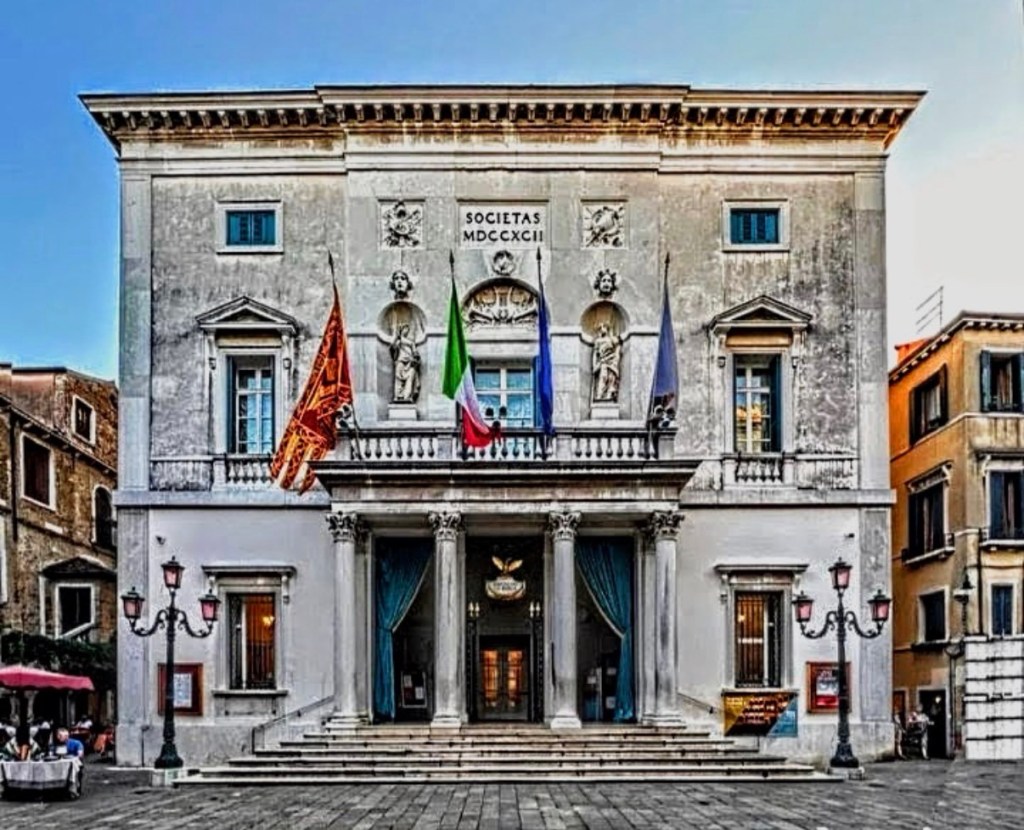
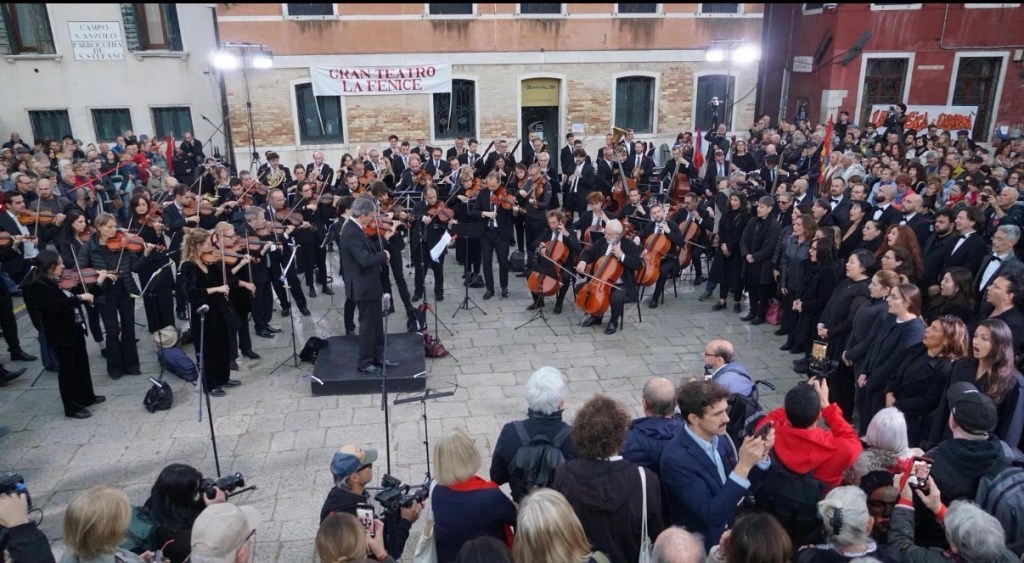
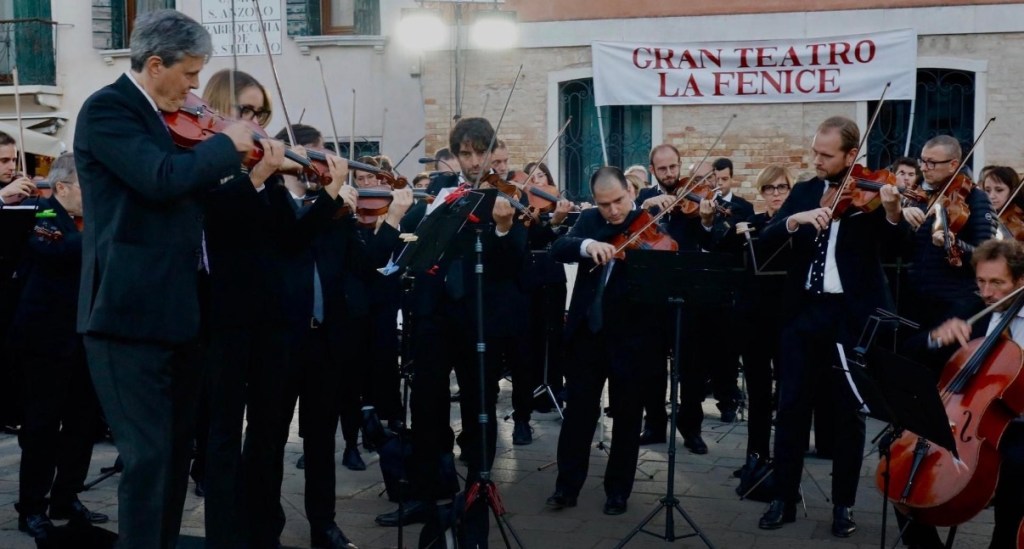
The Fenice deserved better than to become a political stage.





Leave a Reply