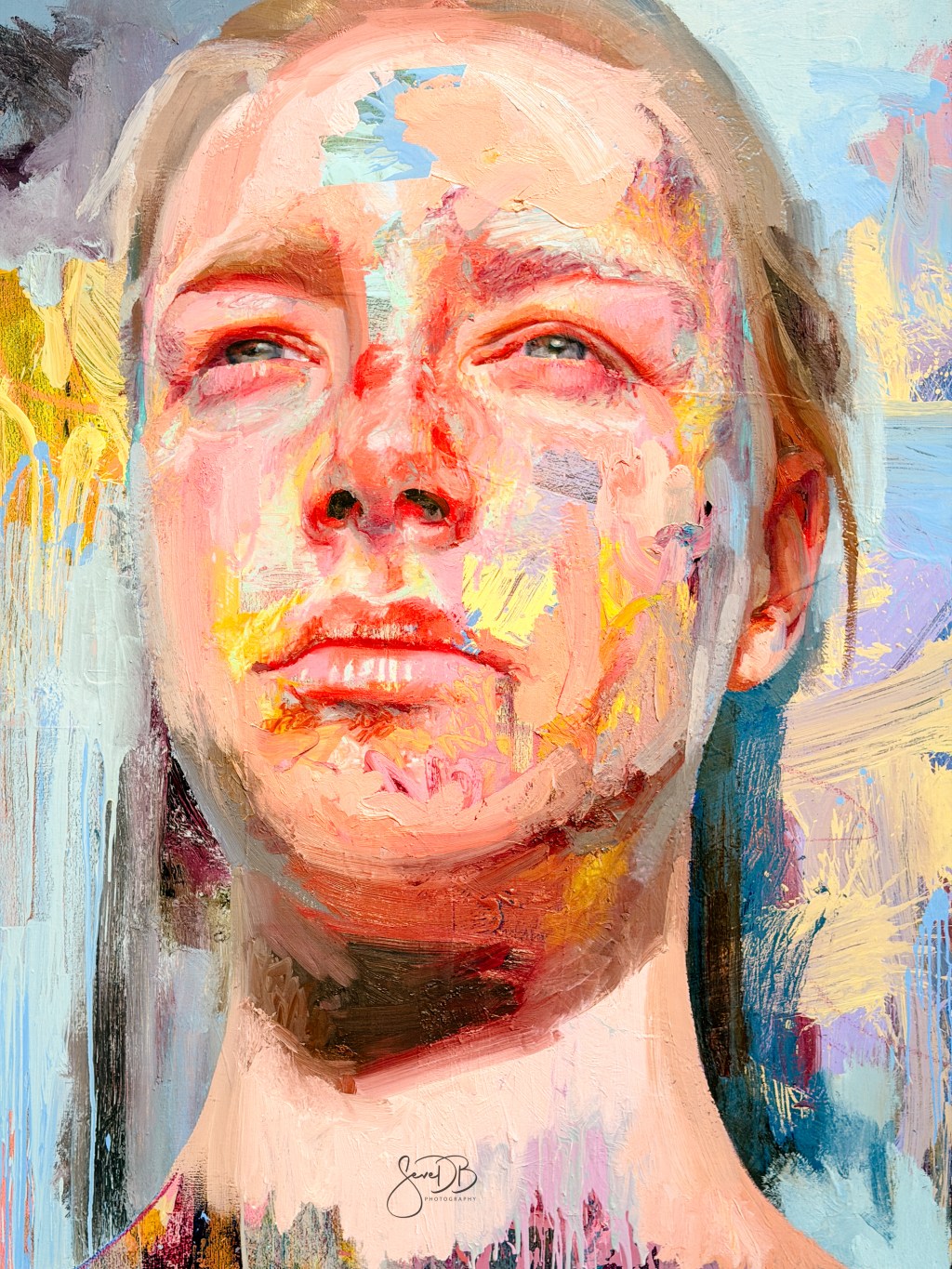
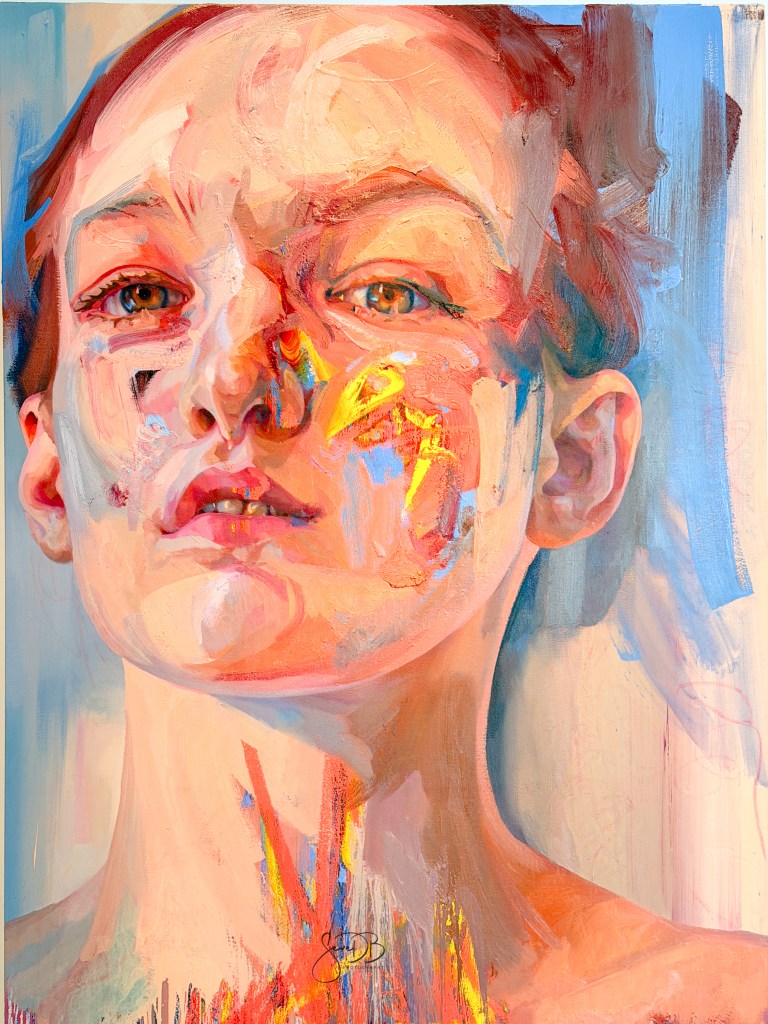
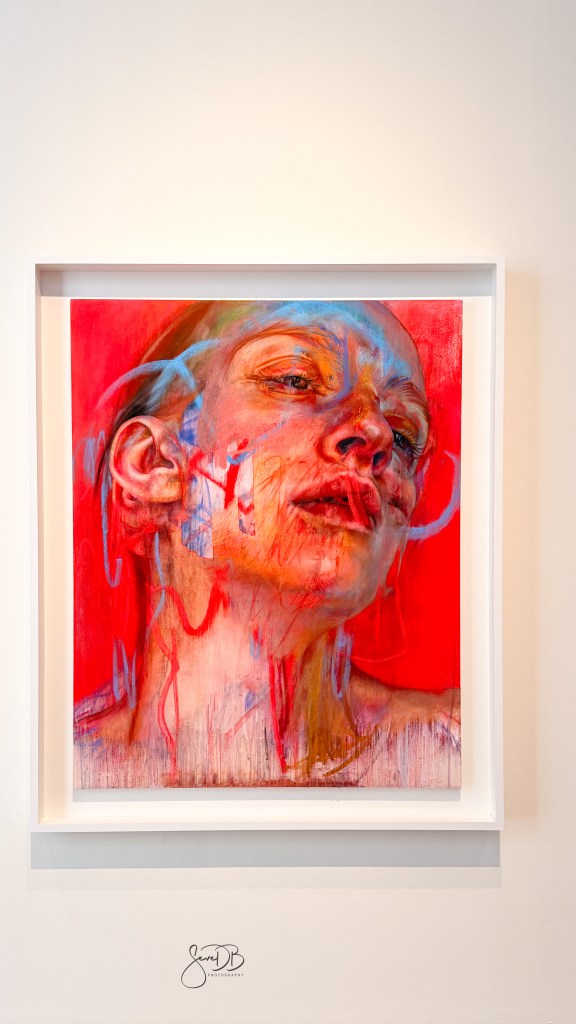
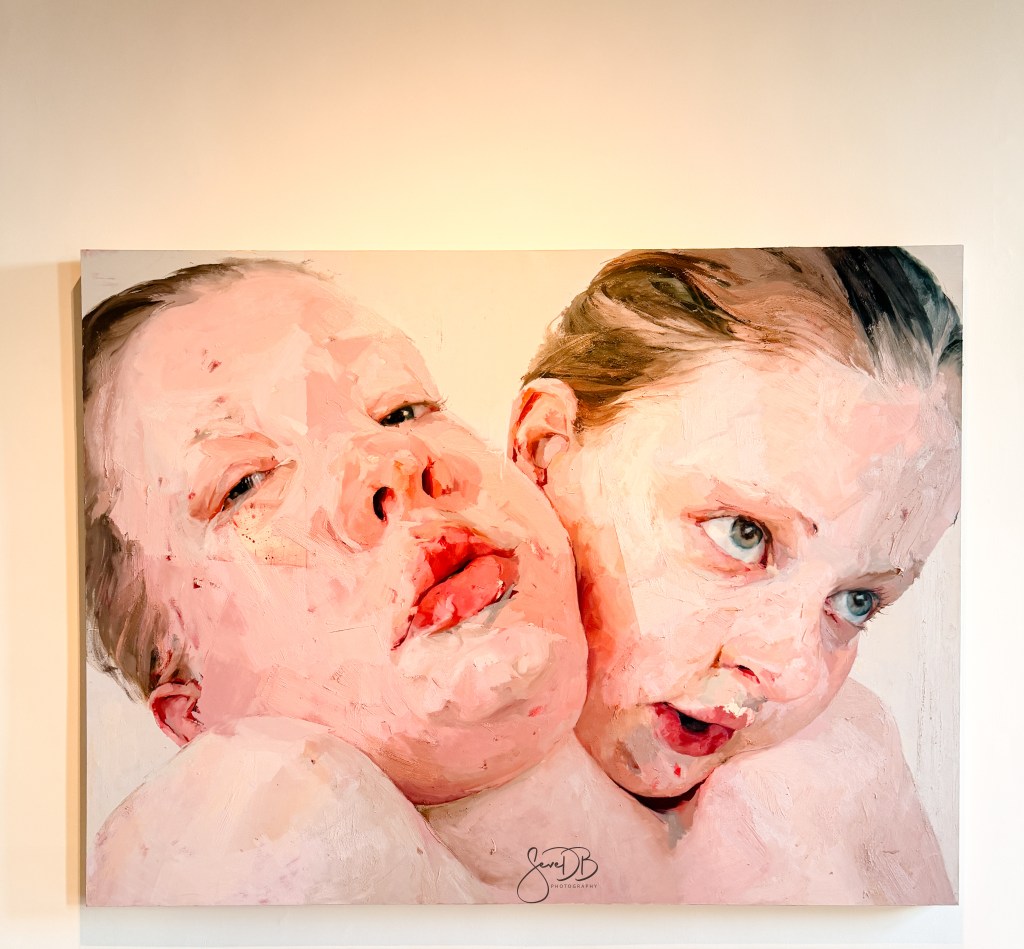
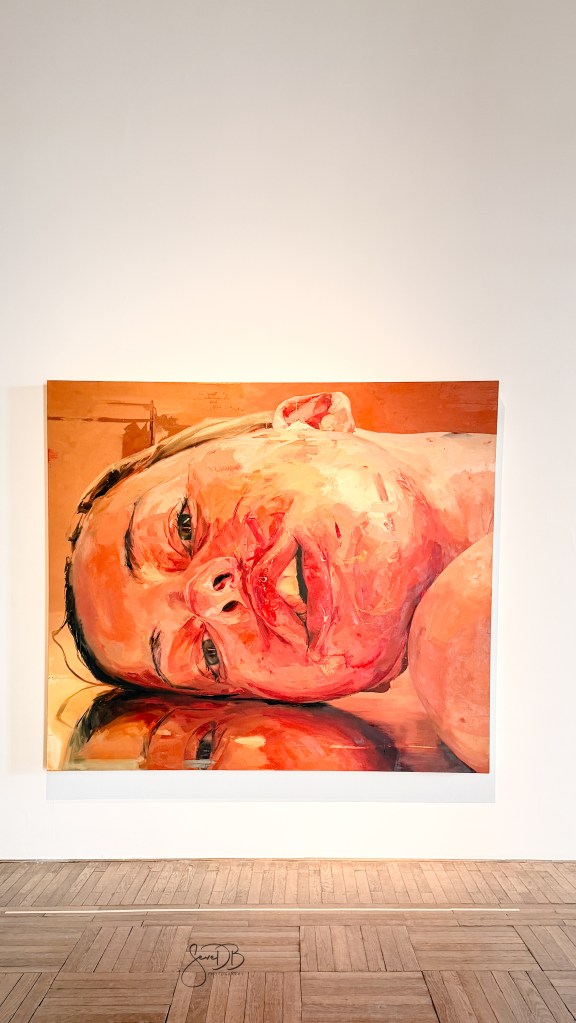
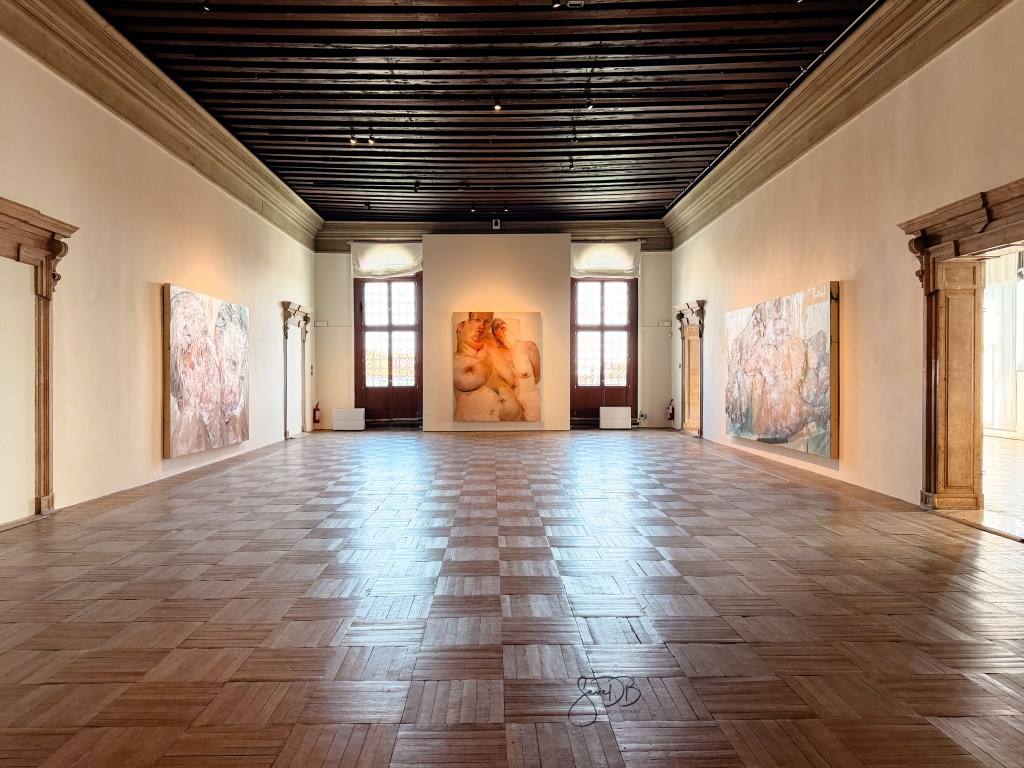
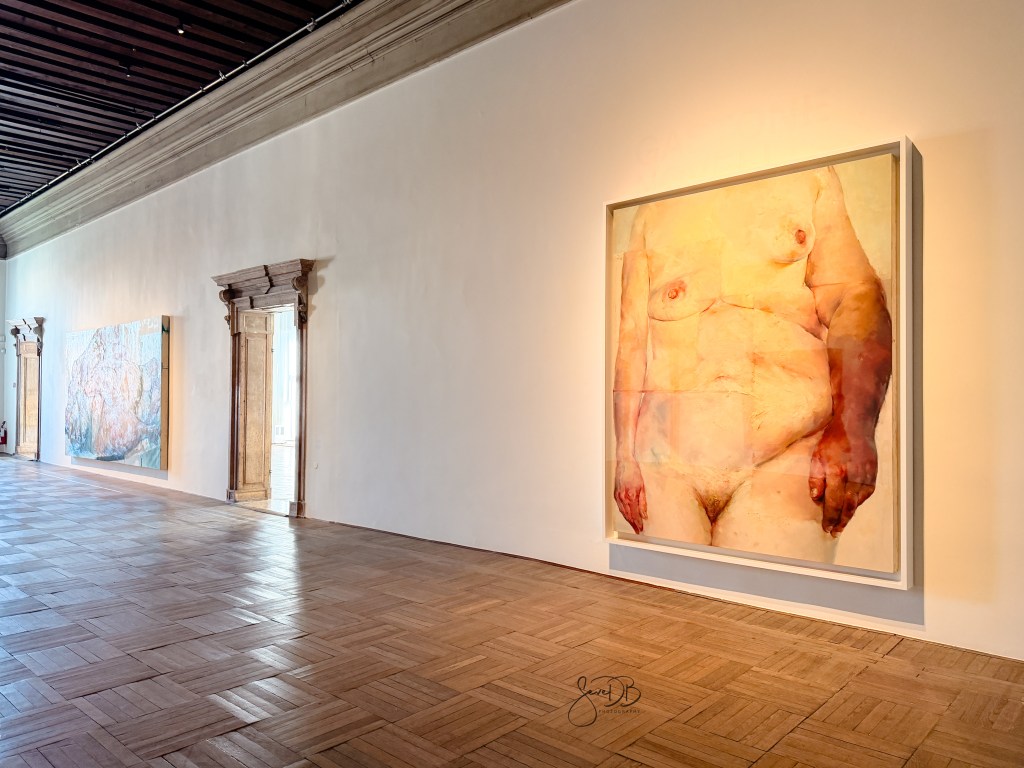
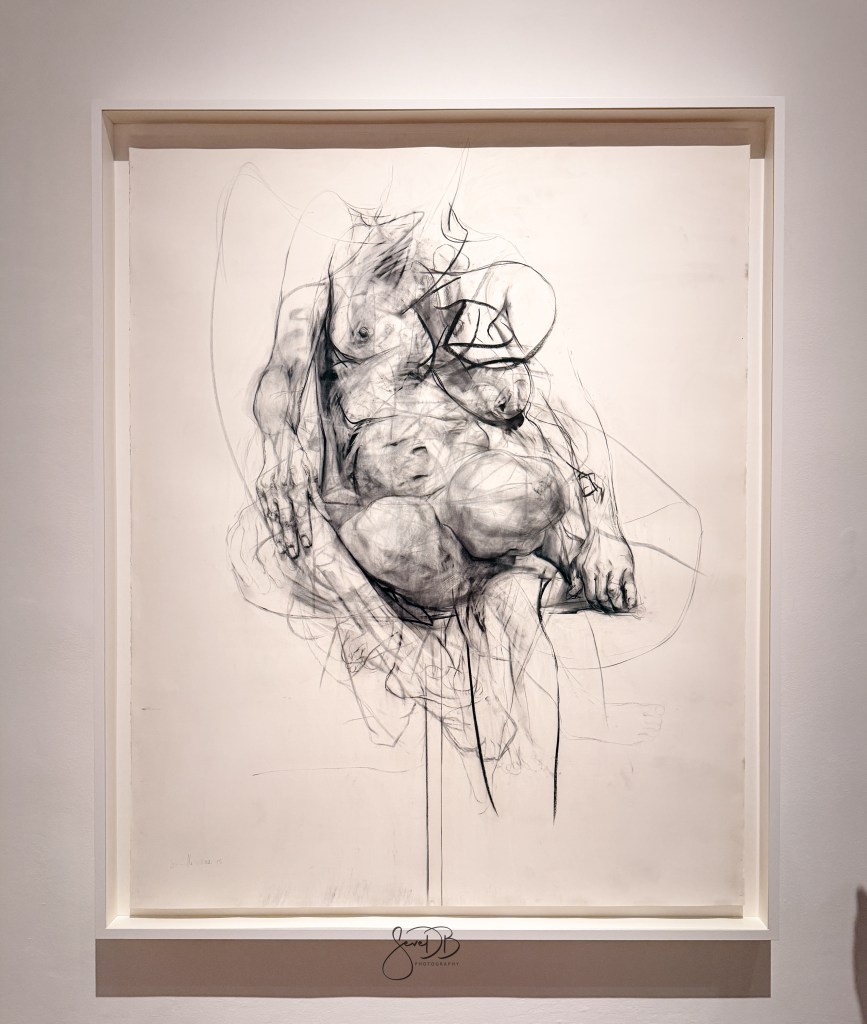
The first major exhibition of Jenny Saville’s work in Venice is currently on view at Ca’ Pesaro, running from March 28 to November 22, 2026. Over thirty paintings and drawings trace her career from her beginnings in the 1990s to the present—a rare opportunity to follow the full arc of one of the most uncompromising painters working today.
What Jenny Saville Is Really Saying
The official presentation is respectful and thorough: her curriculum, her influences, her devotion to the great masters, the colors of Venice. All true. But it stays safely on the surface.
Academic literature hasn’t gone much further. The critical establishment tends to frame Saville’s work around body image, beauty standards, and what one essay in the feminist philosophy journal Hypatia calls an “aesthetic of disgust”—the distorted, bruised, overweight female body as resistance to conventional femininity.
Michelle Meagher’s 2003 essay argues that Saville forces us to sit with our disgust and interrogate it, drawing on Kristeva’s concept of abjection and Foucault’s notion of the “tightly managed body.” It is respectable scholarship. But it is theory-first criticism, which tends to find exactly what its tools were designed to find—and flatten everything else.
Saville herself has pushed back on the violence reading, saying her work’s anatomical truth was never intended as aggression. Fair enough. But there is a difference between what an artist intends and what a historically aware viewer sees. The paintings haven’t changed. The cultural context has.
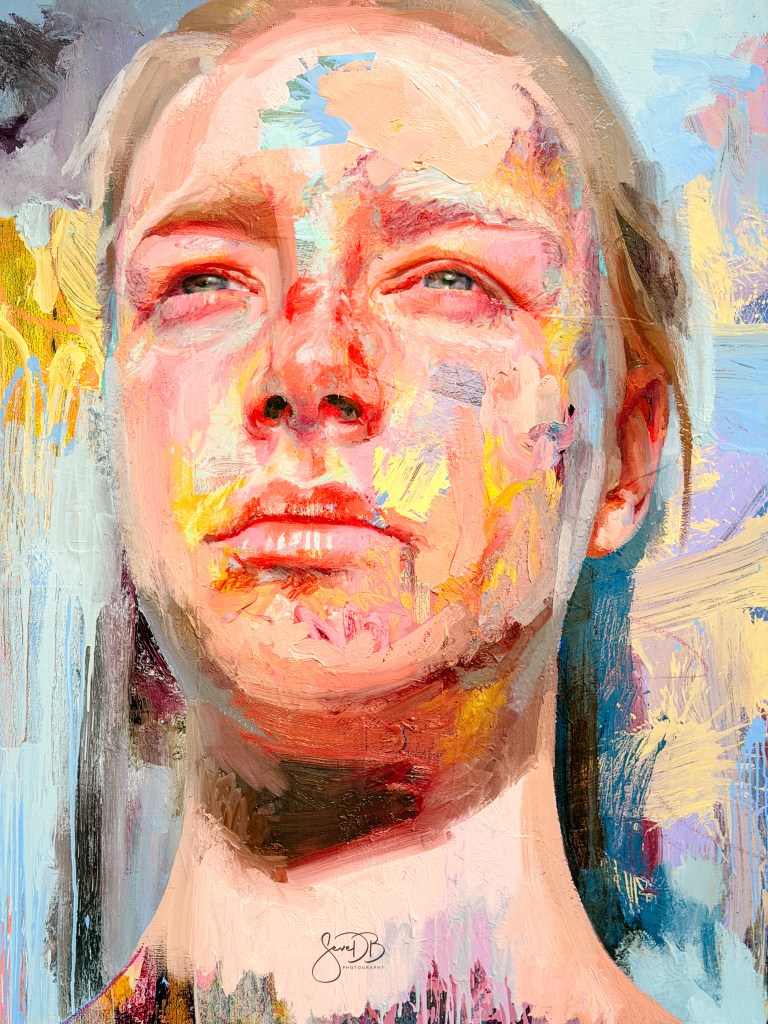
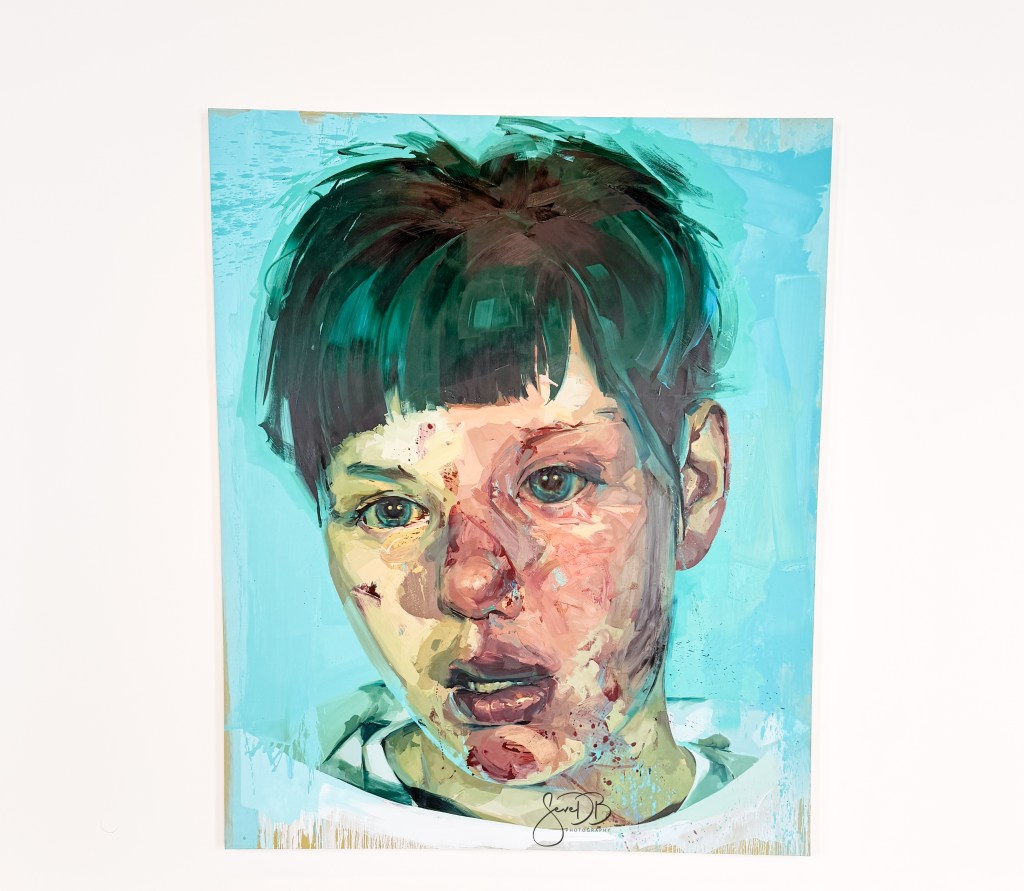
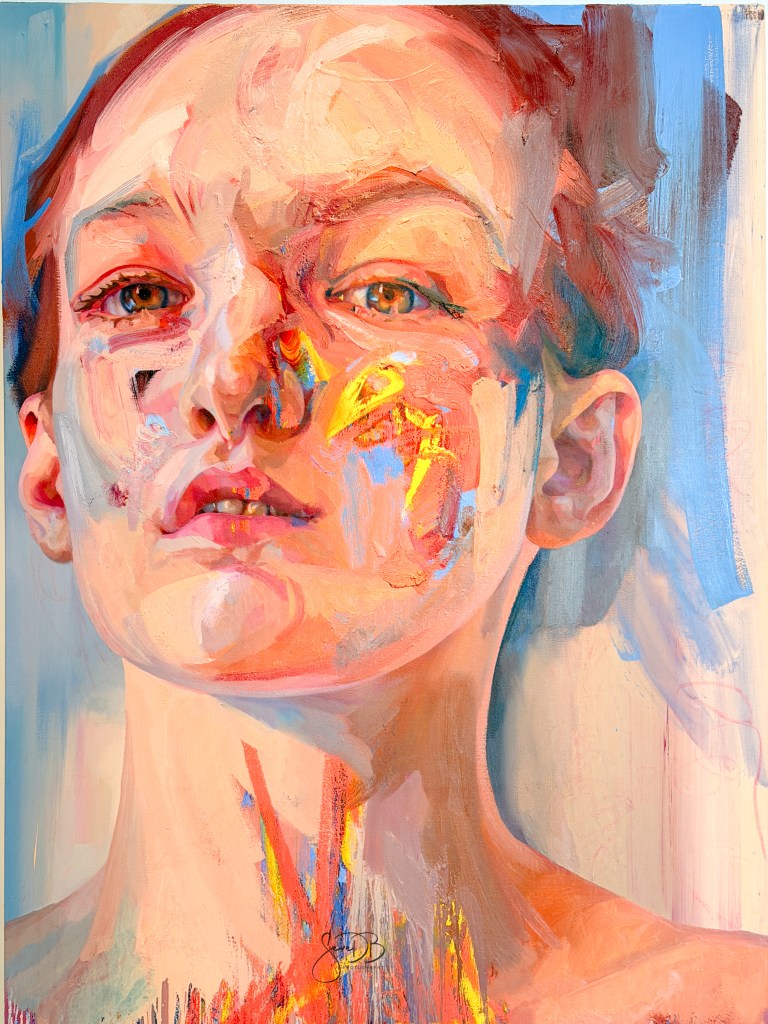
What I saw at Ca’ Pesaro was something the official descriptions didn’t mention and the academic literature hasn’t quite reached: an undercurrent of vulnerability, of exposure, of innocence placed in danger. The stare in Saville’s figures is not defiance. It is not the fat-pride reclamation that Meagher reads into them. It is something closer to an appeal—do you see what is happening to me? Directed not at a male oppressor but at another woman. One who might actually understand.
That reframes everything. What Meagher calls the viewer’s disgust is, in this reading, a failure of recognition. We flinch when we should be responding.
In 2026, with everything we now know about how power operates around young women—and how readily society looks away, or worse, assigns them blame—Saville’s paintings feel urgently contemporary. The faces stay with you long after you leave Ca’ Pesaro. And they leave you with an uncomfortable question: in the way women are seen, perceived, and judged, how much has actually changed?





Leave a Reply