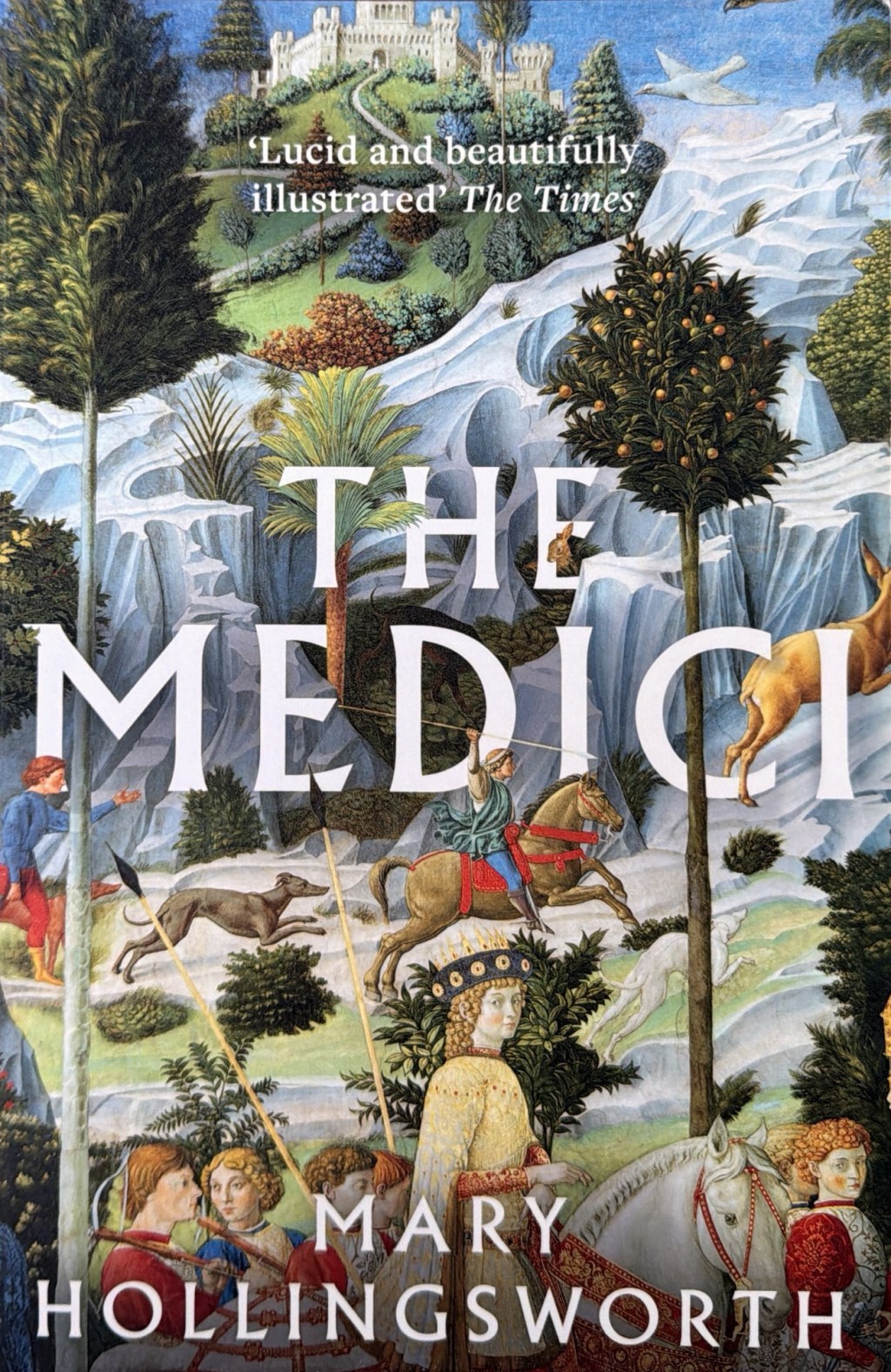
Mary Hollingsworth book is an epic work of about 400 pages, with a Medici-family tree so as to understand the lineage, and crafted with beautiful images.
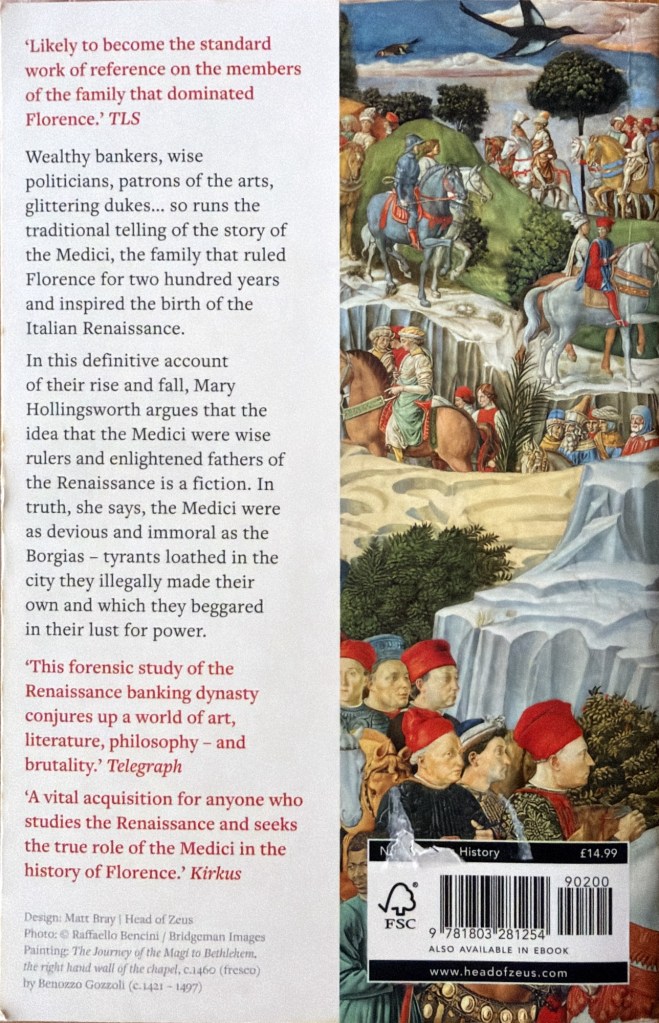
I read this book with interest, but I almost immediately put off by the back cover explanation
“… Hollingsworth argues that the idea that the Medici were wise rulers and enlightened fathers of the Renaissance is a fiction. In truth, she says, the Medici were as devious and immoral as the Borgias – tyrants loathed in the city they illegally made their own …”
My first reaction was that to compare the Borgia with the Medici was a stretch.
The Medici: Built a banking empire; Manipulated republican institutions; Bought influence; Practiced nepotism; Used political repression when threatened.
The Borgias: Acquired power through papal office.; Were repeatedly accused by contemporaries of assassination, poisoning, extortion, and military conquest on a different scale.
Modern historians dispute some of the darker Borgia legends, but even allowing for exaggeration, the comparison is not straightforward. The Medici often sought legitimacy through patronage and civic identity; the Borgias through papal and military power.
As for the sentence
“illegally made Florence their own.”
That is a very modern way of describing a fifteenth-century reality. Florence was technically a republic. The Medici did not become dukes or kings in the early period. They exercised power behind the scenes through patronage networks, alliances, control of offices, loans, and influence over elections. From a constitutional point of view, one could argue they undermined republican institutions. But if we apply that standard consistently, half of Renaissance Italy becomes “illegal.”
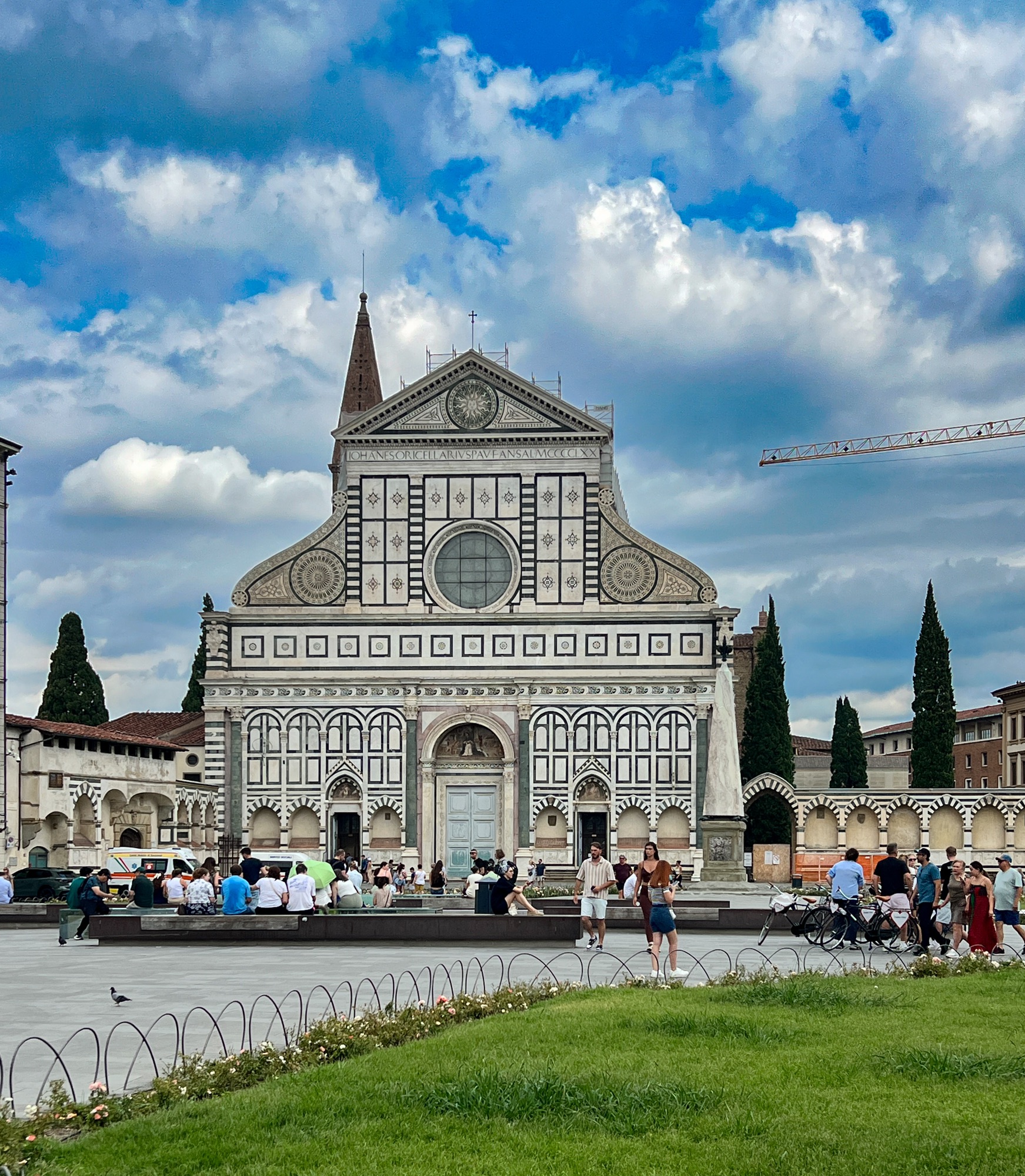
Back in those days, the House of Este originated in Este near Padua, not Ferrara. The House of Gonzaga were not the original rulers of Mantua. They displaced the Bonacolsi family in 1328. The House of Sforza were essentially military adventurers who acquired Milan through force and marriage. The House of Visconti had seized power generations before. Venice itself was dominated by a narrow hereditary oligarchy.
The question was never “Who has the legal right?” in the modern democratic sense. The question was: Who is powerful enough to rule, and can they keep order?
Cosimo de’ Medici understood this brilliantly. He rarely held the highest office. He preferred influence without titles. That was not unique; it was politically sophisticated. In fact, one could argue that the Medici were unusually cautious. Compare them with the Sforzas. Francesco Sforza simply took Milan and became duke. The Medici spent decades pretending Florence remained a republic. I also think there is a deeper issue here. Florence has always had a romantic reputation because it produced Michelangelo, Leonardo, Botticelli, Brunelleschi, Machiavelli, and so many others.
Perhaps, Mary Hollingsworth might have looked at that admirations and conclude:
“If everyone loves the Medici, we need to expose the darker side.”
The Medici competed against the Strozzi, Peruzzi, Alberti, Pazzi, and others. They all sought papal contracts. They all used influence. They all maneuvered politically. The Medici happened to win.
And history is usually written by the winners.
The Pazzi conspiracy is a perfect example. Giuliano’s murder inside Florence Cathedral during Mass was not some noble republican uprising. It was a violent power grab supported by powerful interests, including elements around Pope Sixtus IV. If the Pazzi had succeeded completely and Lorenzo had died too, later historians might have written an entirely different story about the “tyrannical” Medici being overthrown by defenders of liberty.
I am willing to acknowledge the Medici’s manipulation, wealth, ambition, and arrogance. What I resist is the suggestion that they were somehow exceptional monsters compared with everyone else around them.
That is a very different argument—and, in my view, a stronger one.
The Renaissance was not populated by modern democrats. It was populated by merchant princes, bankers, popes, mercenary captains, and dynastic families. Judging only the Medici by standards that nobody else met risks distorting the period as much as the old heroic histories did.
In a strange way, the most convincing conclusion may be that the Medici were neither the saints of traditional Florentine mythology nor the villains of some revisionist accounts. They were simply among the most successful players in a game that everyone in Renaissance Italy was playing.
Hollingsworth seems to have set herself the task of correcting centuries of Medici glorification. The problem with corrective histories is that they sometimes swing too far in the opposite direction. If older historians painted the Medici as Renaissance superheroes, she occasionally seems determined to portray them primarily as cynical power-seekers. Both views contain truth, but neither is the whole truth.
Hollingsworth describes Lorenzo the Magnificent as spoiled and arrogant.
Was he arrogant?
Almost certainly. How could he not be? He grew up in a world where the greatest scholars, artists, diplomats, and poets came to him. He was effectively raised as Florentine royalty in a republic that pretended not to have princes. Arrogance would hardly be surprising.
But reducing Lorenzo to arrogance misses the larger point. Florence under Lorenzo became one of the intellectual capitals of Europe. He protected artists, supported humanist scholarship, and navigated Florence through extraordinarily dangerous political waters. One can acknowledge his flaws without pretending his achievements were accidental.
The same applies to Cosimo I. He was certainly authoritarian by modern standards. Yet he transformed Florence from a turbulent city-state into a stable grand duchy. He commissioned public works, strengthened administration, expanded infrastructure, and turned Florence into a major European court. Even critics of the Medici generally concede that Cosimo I was one of the most capable rulers Italy produced in the sixteenth century.
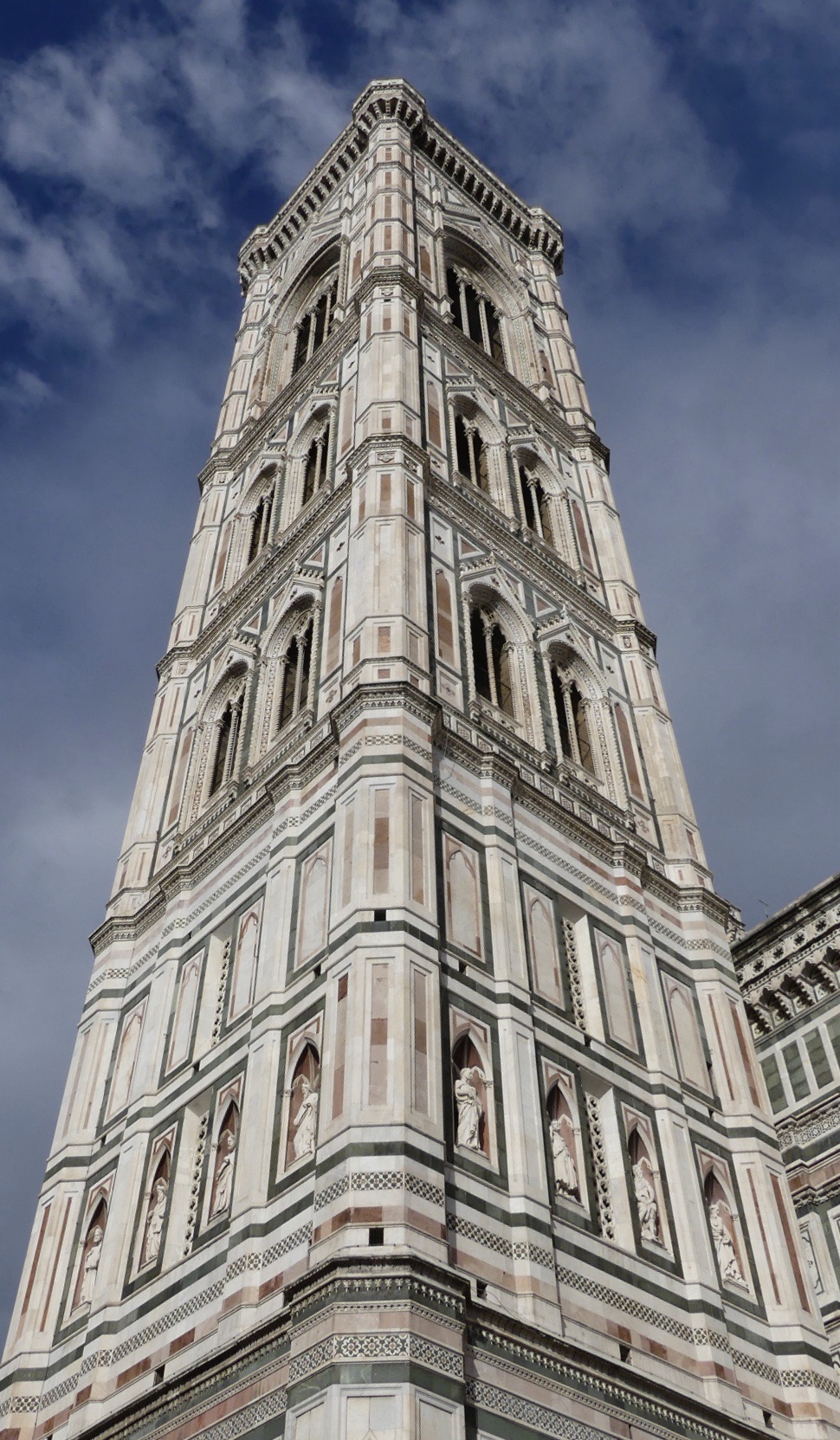
In my view the author also misses out on the Medici women. Renaissance history has traditionally been written through male political actors. Yet figures such as:
- Contessina de’ Bardi
- Lucrezia Tornabuoni
- Catherine de’ Medici
- Marie de’ Medici
were not decorative figures. Lucrezia in particular was politically influential, managed family affairs, commissioned literary works, and acted as an adviser. Catherine de’ Medici practically dominated French politics for decades. It is difficult to tell the full Medici story without giving these women substantial attention.
The back-cover copy is essentially saying:
“Forget everything you thought you knew. The Medici were not wise fathers of the Renaissance.”
But when historians spend 600–700 pages immersed in a subject, they often arrive at a more nuanced conclusion than the marketing department. My suspicion is that Hollingsworth began with a strong revisionist impulse, spent years researching the family, and ultimately found herself unable to deny the scale of what they left behind.
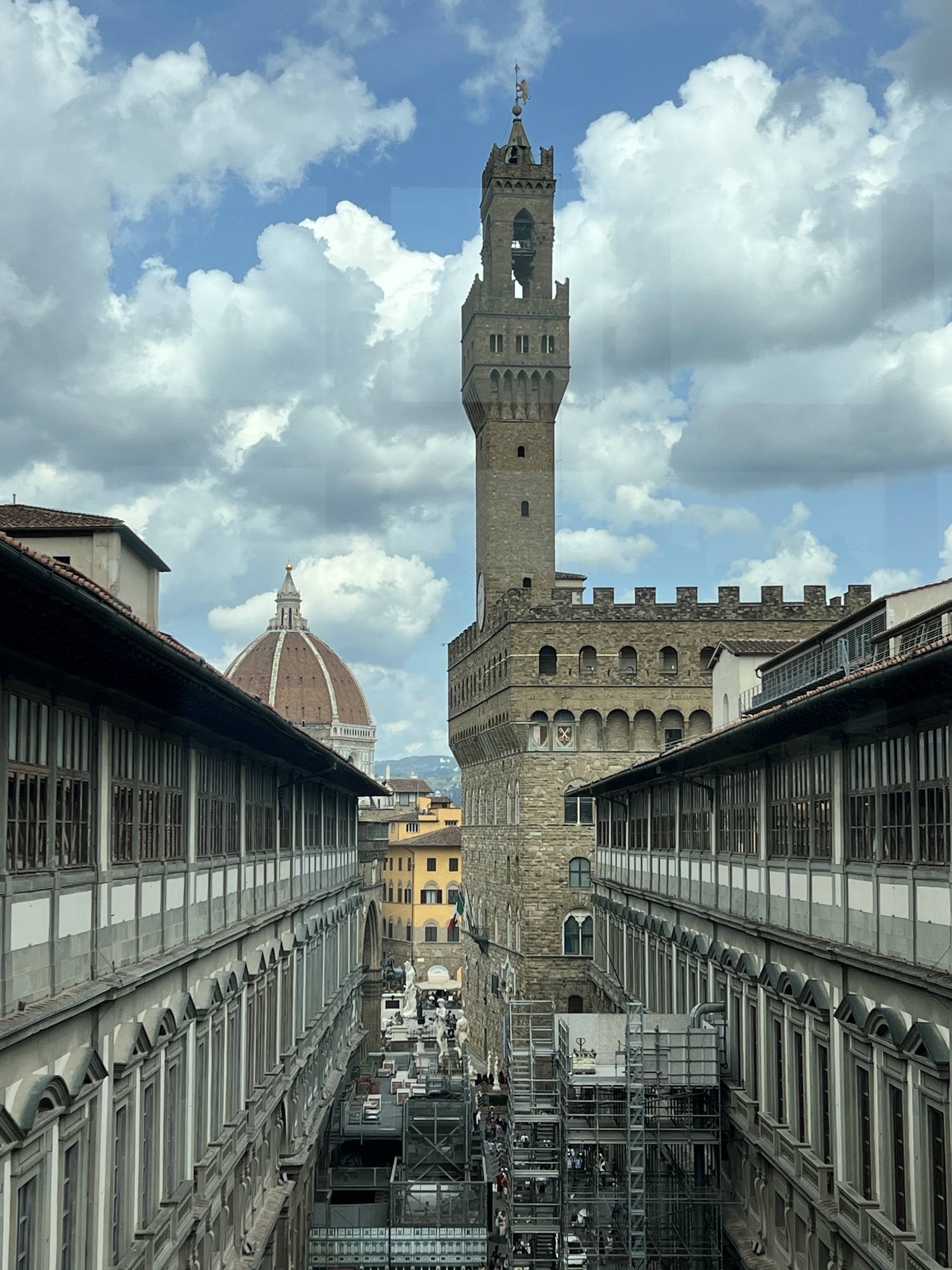
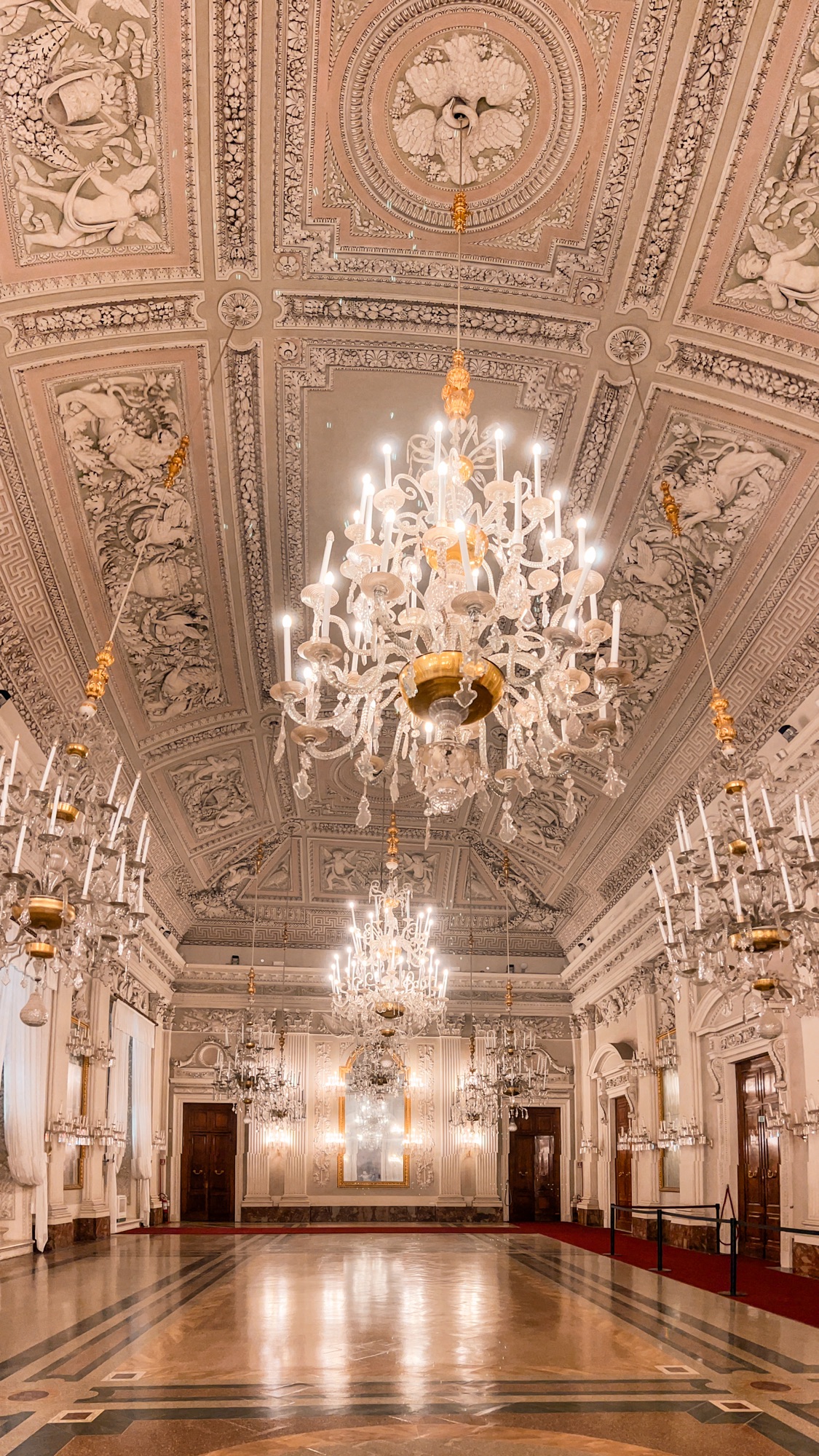
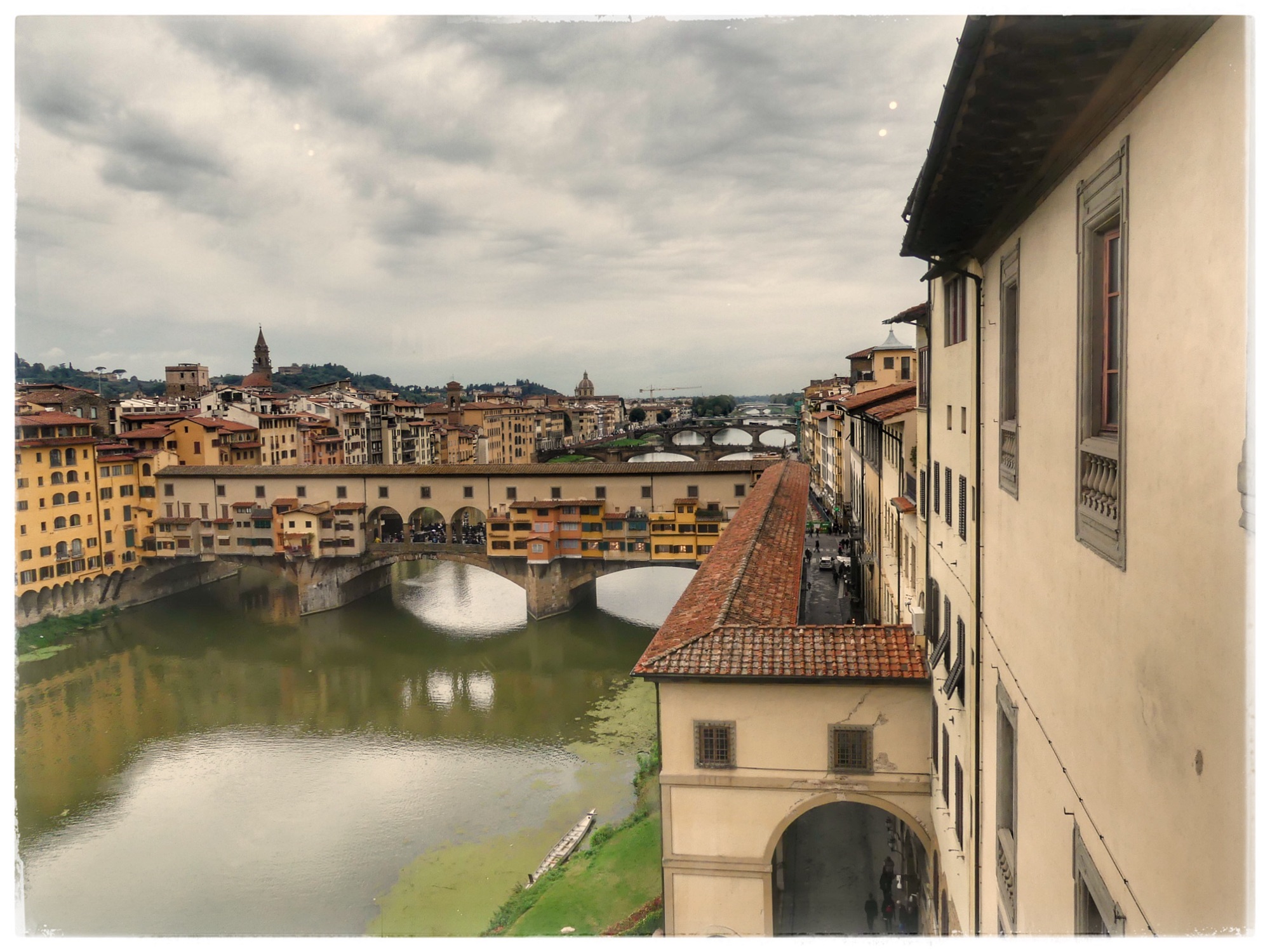
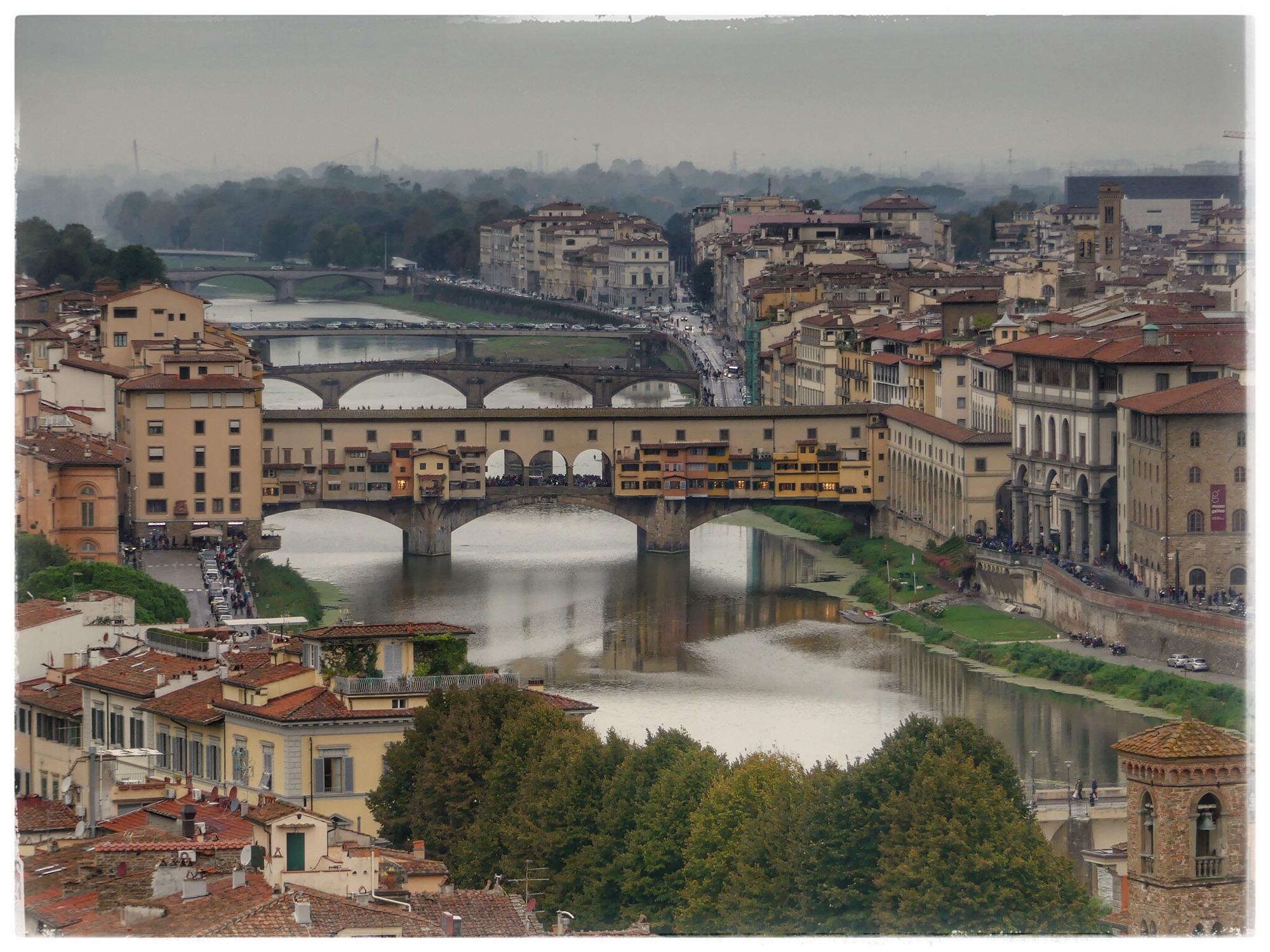
But to her credit, noticed in the final pages finally she acknowledge the extraordinary legacy of Florence itself. One can argue that the Medici were ambitious, vain, manipulative, and often self-serving. Yet when one walks through the Uffizi, Palazzo Pitti, San Lorenzo, the Medici Chapels, the Laurentian Library, or simply the streets of Florence, it becomes very difficult to conclude that they left nothing but damage behind.
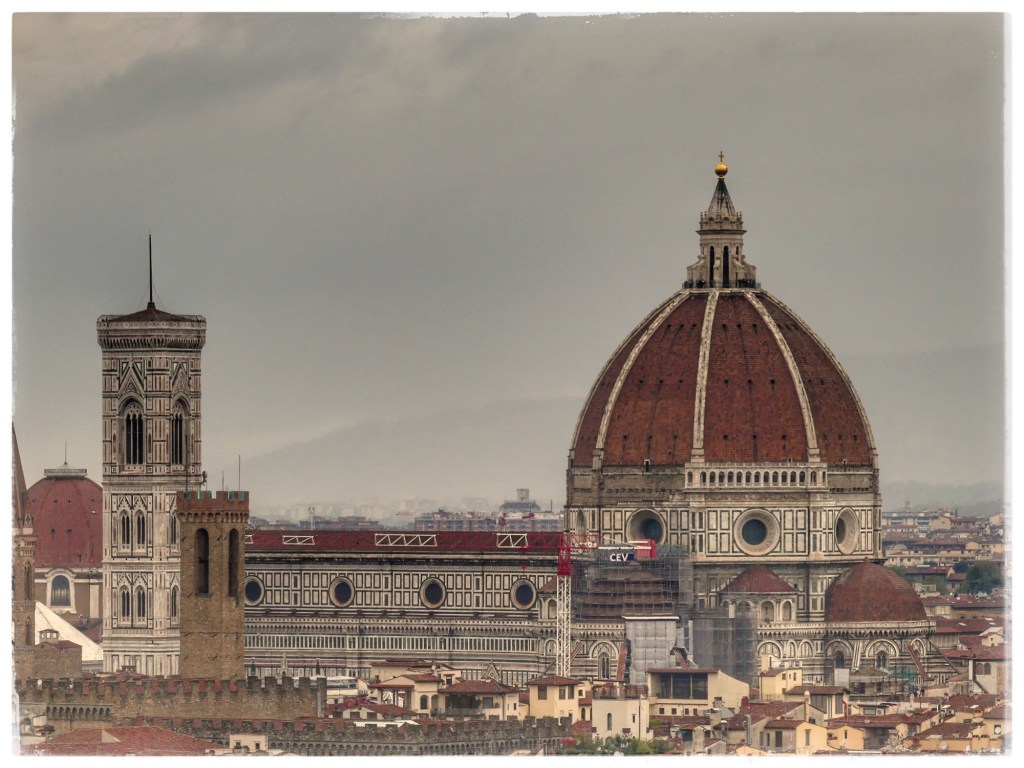
History is rarely a choice between saints and villains. The Medici were probably what many successful ruling families are: talented, flawed, ambitious people who built something remarkable while pursuing their own interests. That is less dramatic than either the traditional myth or the revisionist backlash—but it is usually where the truth tends to reside.
“Both the Uffizi, where Cosimo I housed his administration, and the Palazzo Pitti are filled with artistic treasures acquired by the Medici – Lorenzo the Magnificent’s priceless collection of sardonyx and amethyst vases, the antique statues bought in Rome by Cardinal Ferdinando, the paintings by Titian and Raphael that formed the dowry of Vittoria della Rovere, and hundreds of family portraits.”
“This grandiose display of dynastic pride proved over-ambitious. Nonetheless, it is an eloquent testimony to the remarkable Medici family, to its astonishing achievements and its dismal decline.”







Leave a Reply