There are reading lists everywhere: summer reading lists, bestseller lists, fall-themed lists that pop up as soon as the leaves start turning. Some are curated by major newspapers like The New York Times; others come from well-known figures like Bill Gates, Oprah, Obama, and a rotating cast of literary influencers. And then—there are my lists.
I keep a running list on Goodreads, where I also set a yearly reading challenge—15 books by January 1, 2026. What I like most about Goodreads is the community of curious readers who write thoughtful reviews. Their insights often inspire me to leave my own reflections, which has become an important part of my reading process. I notice I read with more focus and engagement when I know I’ll be writing a review—usually for books I either really loved or couldn’t quite tolerate.
In parallel, I keep more personal lists in my agenda and bullet journal. These are freer, more flexible: I can shift books around, cross them off, or even erase them entirely without judgment. Some of these lists are so long, I’d need more years on Earth than I probably have left to read them all—but what a lovely problem to have.
Here’s a current compilation of books I’m drawn to. I doubt I’ll read them in this exact order, but a few have become absolute musts:
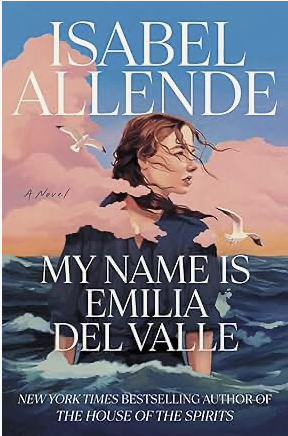
My Name Is Emilia del Valle, by Isabel Allende
In San Francisco in 1866, an Irish nun, abandoned following a torrid relationship with a Chilean aristocrat, gives birth to a daughter named Emilia del Valle. Raised by a loving stepfather, Emilia grows into an independent thinker and a self-sufficient young woman.
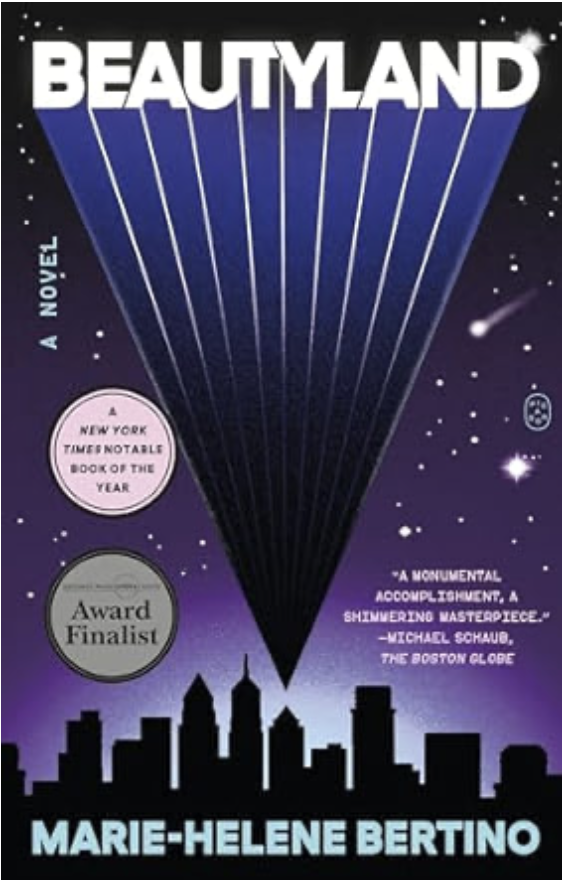
Beautyland, by Marie-Helene Bertino
Highly recommended by The New York Times Book Review, Esquire, Time, Elle, The Boston Globe, Literary Hub, The Guardian, Kirkus Reviews, Goodread, and Dakota Johnson!
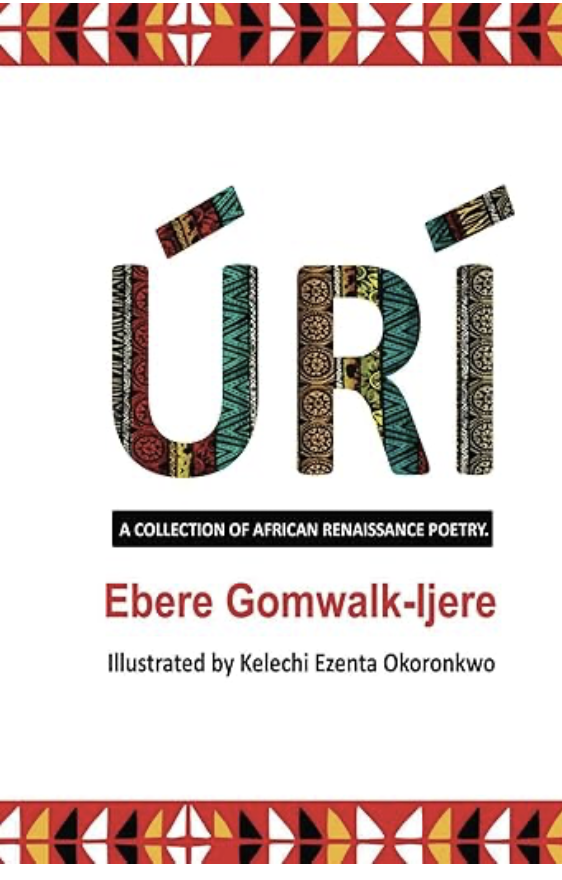
Uri, by Ebere Gomwalk-Ijere
A subtle yet explosive rendition of love, passion, hate and patriotism delivered in a simple but straight from the heart. The style aided by colourful suggestive backgrounds that aid reading and takes the mind on an amazing cultural ride.
A series of poems from my heart as I go through the emotions and stages of life, my experiences are expressed in my poems. They could be ones of joy, pains, hurts and hopes. They will touch you deeply and profoundly, simply wriiten as they are they are powerful and food for the soul.
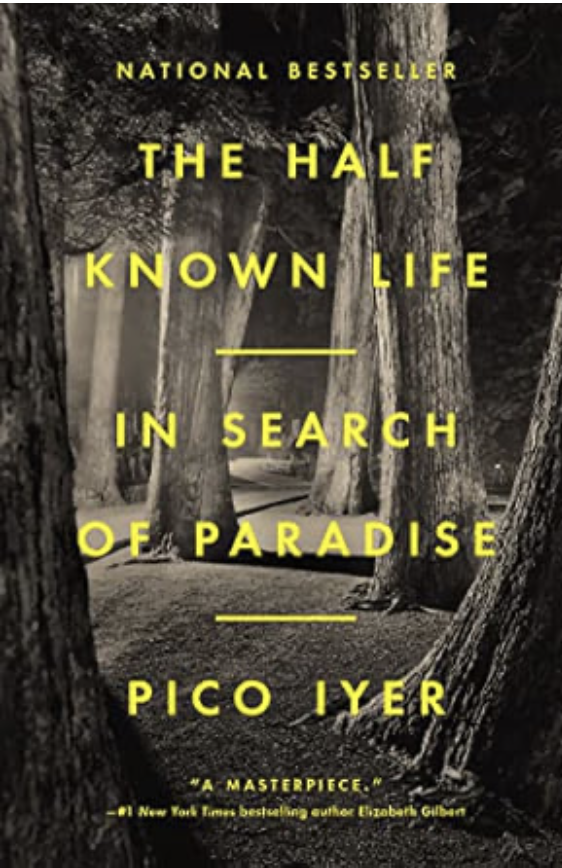
The Half Known Life: In Search of Paradise, by Pico Iyer
Paradise: that elusive place where the anxieties, struggles, and burdens of life fall away. Most of us dream of it, but each of us has very different ideas about where it is to be found. For some it can be enjoyed only after death; for others, it’s in our midst—or just across the ocean—if only we can find eyes to see it.
Reykjavík, by Gudrún Eva Mínervudóttir
Five women of different ages, all united by a shared need for a turning point in their lives, are the protagonists of Reykjavík, amore. Among the colorful houses of the Icelandic capital—now overrun by tourists—its wide, lively squares, the distant glaciers, and the sea that hides and reveals itself around every corner, everyday life seems to uncover the most hidden emotions and the deepest, long-suppressed desires.
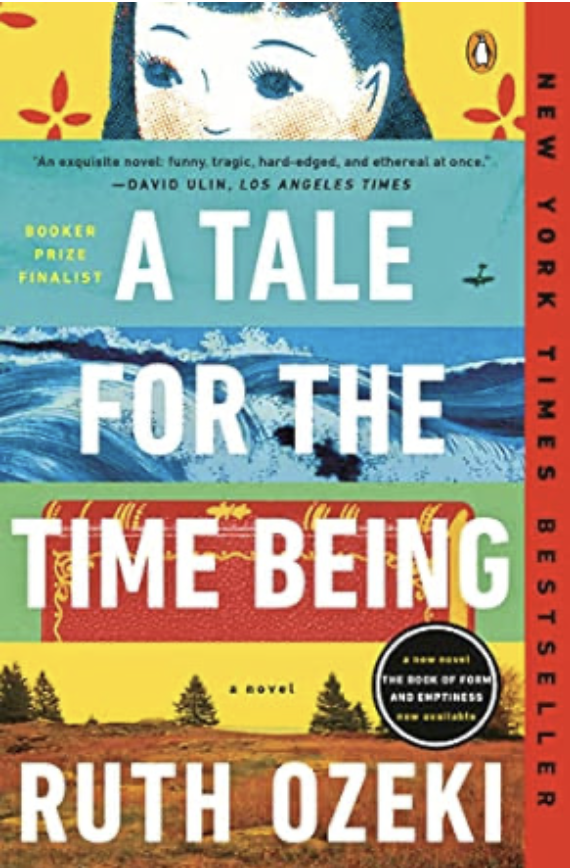
A Tale for the Time Being, by Ruth Ozeki
In Tokyo, sixteen-year-old Nao has decided there’s only one escape from her aching loneliness and her classmates’ bullying. But before she ends it all, Nao first plans to document the life of her great grandmother, a Buddhist nun who’s lived more than a century. A diary is Nao’s only solace—and will touch lives in ways she can scarcely imagine.
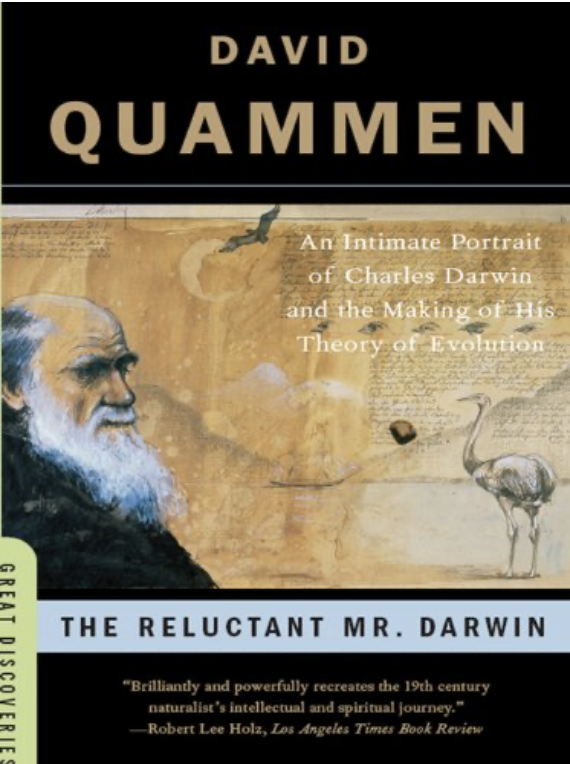
The Reluctant Mr. Darwin: An Intimate Portrait of Charles Darwin and the Making of His Theory of Evolution, by David Quammen
Twenty-one years passed between Charles Darwin’s epiphany that “natural selection” formed the basis of evolution and the scientist’s publication of On the Origin of Species. Why did Darwin delay, and what happened during the course of those two decades? The human drama and scientific basis of these years constitute a fascinating, tangled tale that elucidates the character of a cautious naturalist who initiated an intellectual revolution.
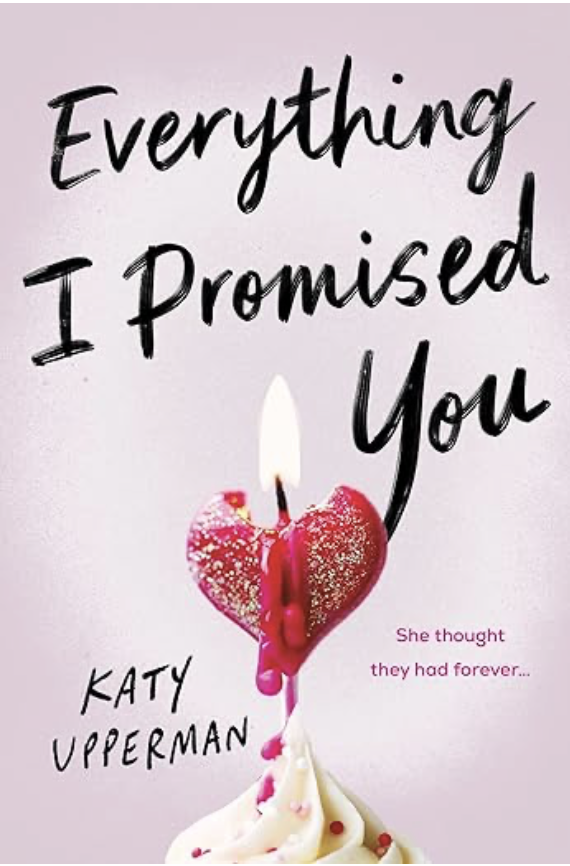
Everything I Promised You, by Katy Upperman
An emotionally raw and romantic portrait of grief, growth, and acceptance.
These are the books I plan to dive into over the coming months—ideally during the long, golden days of summer. I imagine reading on the balcony, stretched out in a beach chair (the best spot, truly), or lingering at an outdoor café with a coffee or an aperitif in hand.
While most of these titles live on my Goodreads list, some I’ve already started, others are patiently waiting their turn. Here they are, queued up and tempting me:
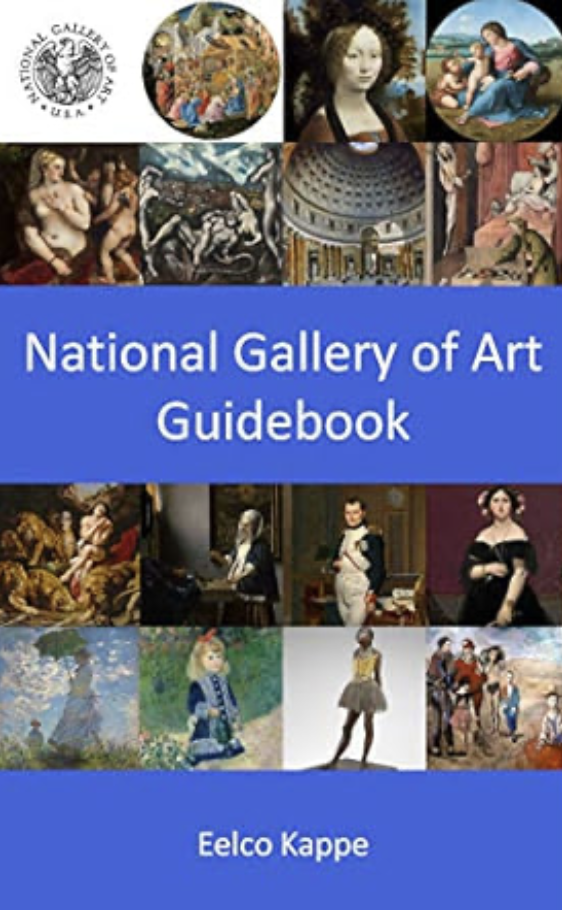
National Gallery of Art, by Eelco Kappe
I visited the National Gallery of Art in Washington, D.C. many times over the years, always drawn back by its quiet beauty and the extraordinary collection it holds. I wanted to create a personal record—a recollection—of the paintings that stayed with me most. Though this list is far from complete (and likely never will be), it’s a start. A way to hold on to fragments of beauty that once stopped me in my tracks.
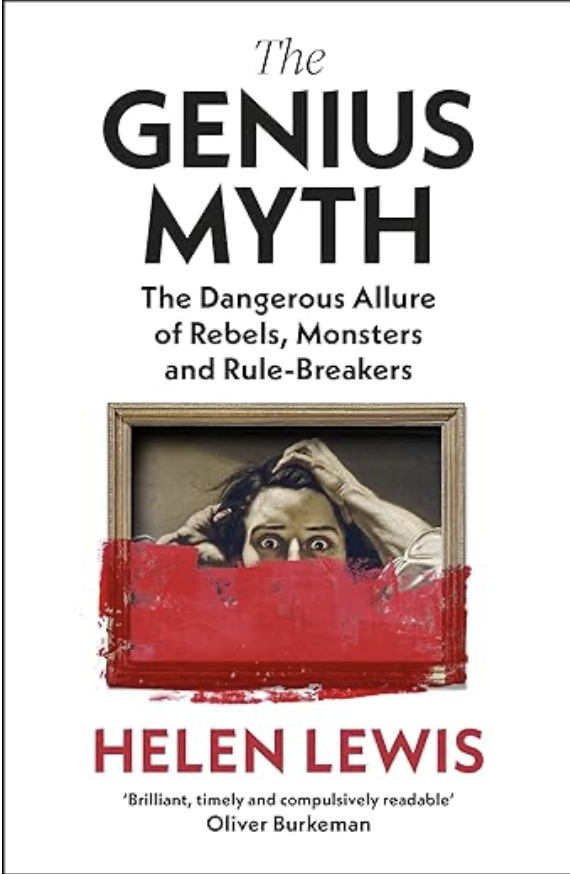
The Genius Myth, by Helen Lewis
The tortured poet. The rebellious scientist. The monstrous artist. The tech disruptor. You can tell what a society values by who it labels as a genius. You can also tell who it excludes, who it enables, and what it is prepared to tolerate. Recommended by The Guardian, Financial Times, New Statesman, and GQ Book for 2025.
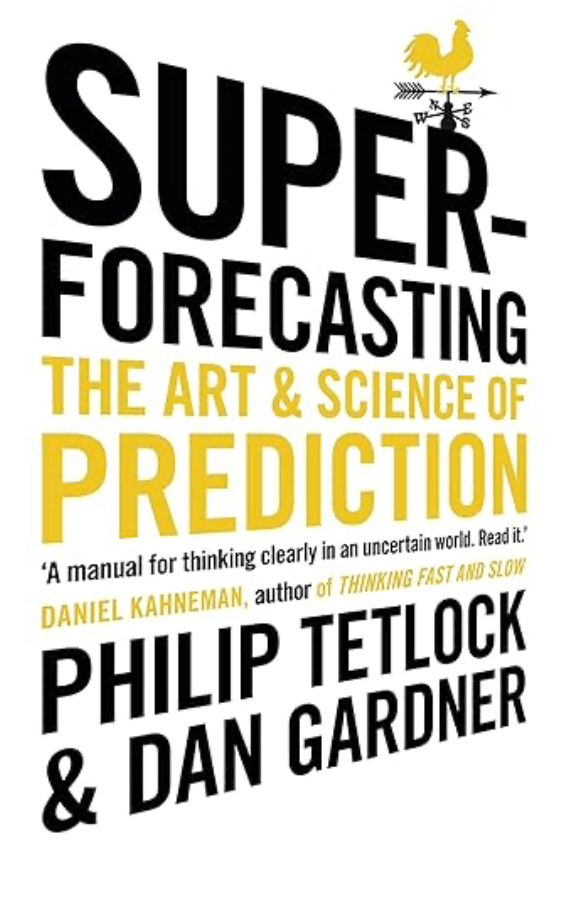
Superforcasting: The Art and Science of Prediction, by P. Tetlock and Dan Gardner
What if we could improve our ability to predict the future?
An international bestseller, this is a book I’ve already read once—but I find myself returning to it again and again. As a forecaster—though not mentioned in its pages—I’ve spent over a decade making predictions on Good Judgment Open, and this book has offered me valuable insights that continue to shape how I think. It’s one of those rare reads that deepens with time and experience.
The book is ‘A manual for thinking clearly in an uncertain world. Read it.’
Daniel Kahneman, author of Thinking, Fast and Slow
Everything we do involves forecasts about how the future will unfold. Whether buying a new house or changing job, designing a new product or getting married, our decisions are governed by implicit predictions of how things are likely to turn out. The problem is, we’re not very good at it.
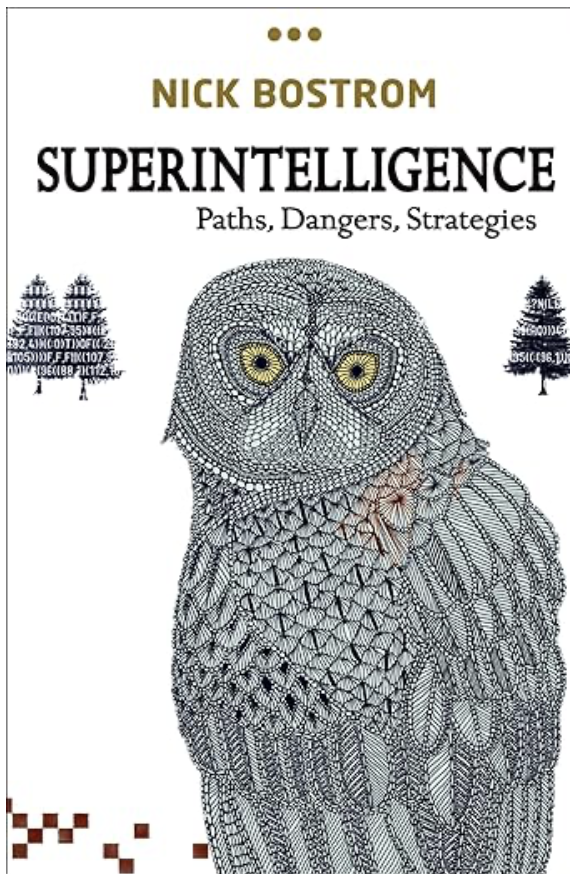
Superintelligence: Paths, Dangers, Strategies, by Nick Bostrom
This book ranks very high on my list. It is and essential reading for understanding the future of AI, its potential, and the ethical considerations surrounding its development. As the CEO of an AI company, Altman sees this as crucial.
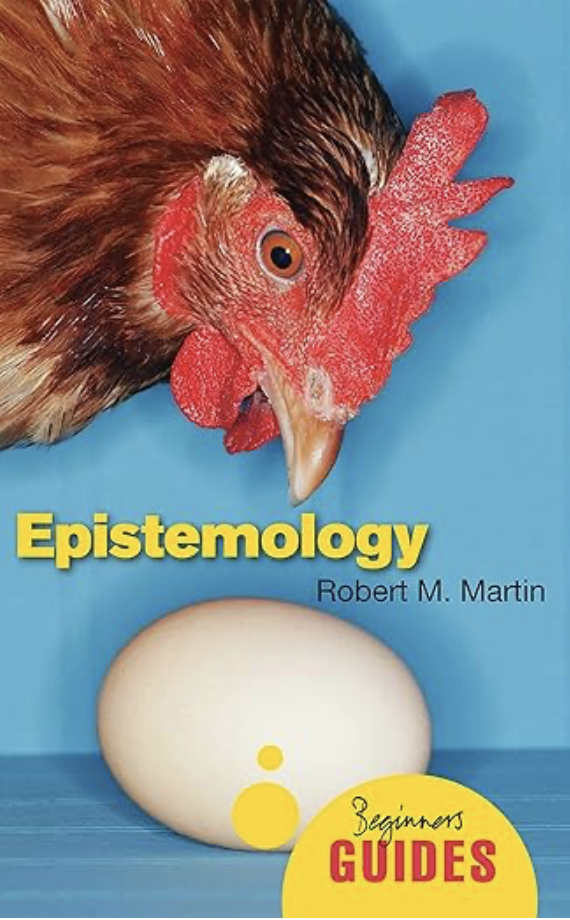
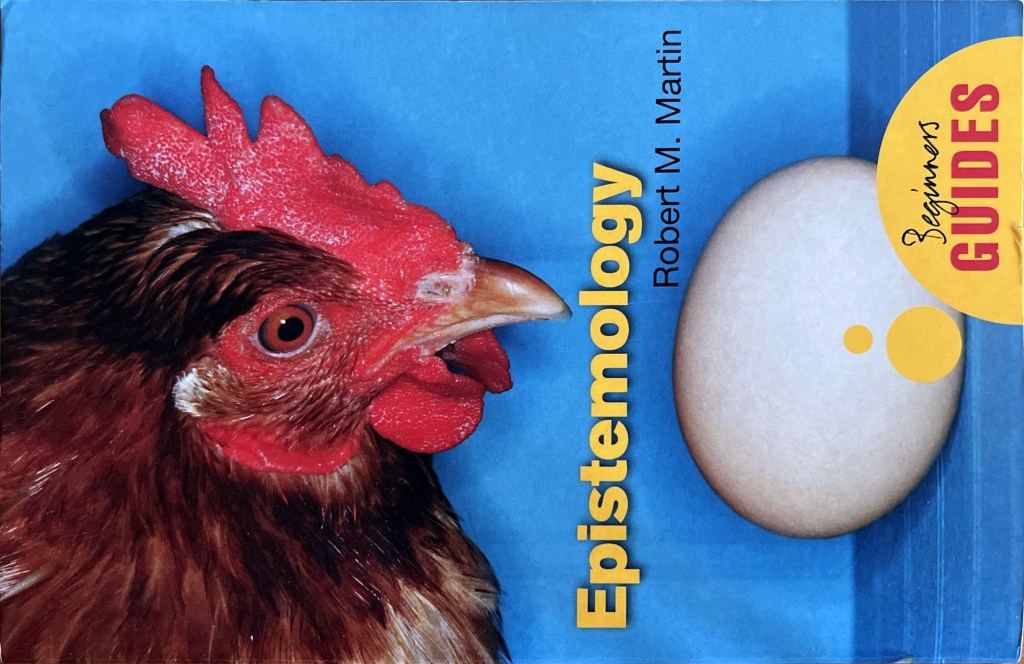
Epistemology: A Beginner’s Guide, by Robert M. Martin
Epistemology is the philosophical study of knowledge. Without knowledge, scientific enquiry is meaningless and we can’t begin to analyse the world around us. What is knowledge? How do you know you are not dreaming? Should we trust our senses? Presuming no prior experience of philosophy, this book covers everything in the topic from scepticism and possible worlds to Kant’s transcendentalism. Clear and readable. This book is an essential reading for students and aspiring thinkers. I’m doing my best with this book, though I’m moving through it slowly—it’s stretching me, and I’m not sure I’ve caught up to its pace just yet. Still, I have high hopes for myself by the time I reach page 160. Even the cover feels like a quiet warning: brace yourself.
Everybody knows things. But what exactly is knowledge?
What’s missing when some beliefs don’t count as know-ledge? Where does knowledge come from? Why are some sources of belief reliable sources for knowledge? Are any sources reliable? It’s surprising – given how ordinary and everyday knowledge is – that the answers are not obvious. Philosophers have been thinking about these questions, and arguing with each other about what the answers are, for at least two thousand years.
How to Read a Book, by Charles Van Doren, and Mortimer J. Adler
An on-going reading. With half a million copies in print, How to Read a Book is the best and most successful guide to reading comprehension for the general reader, completely rewritten and updated with new material. Somehow, I think it is best read in winter.
Reading is one of the most beautiful things we can do with our time. It slows us down, expands our world, and deepens our understanding—not just of others, but of ourselves. Keeping reading lists, however imperfect or ever-changing, gives shape to our curiosity and reminds us that learning is never finished. I share mine not to prescribe, but to inspire. If even one title sparks your interest, I’ll be delighted—but more than anything, I hope to encourage you to read, in whatever form and rhythm suits you. If you feel like commenting, sharing your own lists, or exchanging recommendations, I’d love that—after all, books are even better when they lead to conversation.
 Between the Lines
Leave a comment